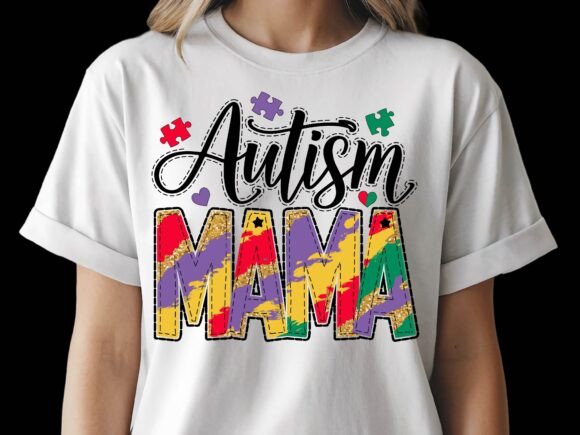
Autism Mama Proud Mom Puzzle Awareness
First Impression: Warm, Clear, and Purpose-Driven
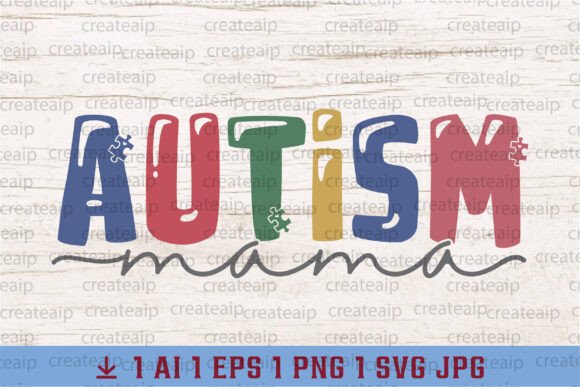
When I opened Autism Mama Proud Mom Puzzle Awareness for the first time, I didn’t see just another awareness graphic—I saw a design with quiet confidence. The puzzle piece motif is integrated thoughtfully, not as a standalone icon but as part of a cohesive phrase layout. The typography balances soft curves with clean readability—no aggressive serifs or over-stylized flourishes that would collapse under satin stitch. It feels warm without being cutesy, proud without being loud, and inclusive without leaning into cliché. That matters—especially when you’re stitching this onto a baby onesie for a new mom or embroidering it on a boutique sweatshirt for a neurodiversity-themed gift shop.
A Real Project Test: Custom Embroidered Tote Bags for a Local Support Group
Last month, I used Autism Mama Proud Mom Puzzle Awareness to create a small batch of embroidered canvas tote bags for a parent-led autism support group. We chose natural cotton canvas (medium weight, tightly woven) with tear-away stabilizer underneath and 40-weight polyester thread in navy and light gray. The result? Crisp lettering, smooth puzzle-piece edges, and zero puckering—even across the curved base seam where the design sat slightly off-grain. Customers commented on how “calm” and “intentional” it looked—not like a stock graphic slapped on fabric, but like something made *for* them. That’s the difference between a decorative Graphics file and a functional machine embroidery design.
Where It Shines—and Where to Pause
Autism Mama Proud Mom Puzzle Awareness works beautifully on:
- Sweatshirt embroidery: The moderate width and open letter spacing prevent fill-stitch bleed on fleece-backed fabrics.
- Embroidered patch: Clean outer edges hold up well when cut and heat-sealed; no fragile corners or micro-details that fray during washing.
- Baby embroidery: Gentle scale fits perfectly on chest placement of 6–12 month onesies—no need to shrink below 3.5" wide, which preserves legibility.
- Tote bag design and pillow cover: Balanced negative space lets the design breathe without looking sparse or overwhelmed.
- Holiday embroidery and personalized gift contexts: Its sincerity reads well on handmade product tags, gift wrap labels, and custom tea towels for family care packages.
That said—proceed with care on:
- Thin or stretchy fabric (like jersey or lightweight rayon): Use cut-away + topping stabilizer to keep letterforms from distorting.
- Dark fabric: The design’s mid-contrast layout means thread color choice matters more than usual. Test navy on black fabric—it reads, but charcoal gray adds more definition.
- Caps and curved surfaces: Avoid placing the full phrase across the front crown. Instead, use just “Proud Mom” or the puzzle icon alone for better hoop alignment and stitch consistency.
- Small hoop sizes (under 4"): The full phrase compresses well, but check that “Autism Mama” remains distinguishable at 3.25"—some lowercase “a”s and “m”s can blur if scaled too aggressively.
What It Adds to Your Craft Business—Beyond the Stitch
As an Etsy seller and small shop product developer, I pay attention to how a design affects buyer trust and perceived value. Autism Mama Proud Mom Puzzle Awareness lands as professional, not generic. It doesn’t shout—it invites conversation. That builds authenticity for handmade product listings, especially in spaces where emotional resonance matters more than trend-chasing. When customers see this on a nursery wall hanging or embroidered apron, they don’t just register “autism awareness”—they sense care in execution. That translates directly to repeat orders, thoughtful reviews, and word-of-mouth referrals among parent communities.
Practical Embroidery Designer Notes You’ll Want to Follow
Before stitching your first Autism Mama Proud Mom Puzzle Awareness project:
- Test on scrap fabric first—especially if using textured weaves or blends. Even “print ready files” behave differently under needle tension.
- Review stitch density: This design avoids ultra-dense fill areas, but confirm no overlapping satin stitches in the puzzle-piece joints—those can cause thread buildup on delicate fabrics.
- Check thread color contrast against your base fabric in natural light—not just screen preview. A subtle gray-on-charcoal combo may vanish in low-light settings.
- Confirm hoop size compatibility before hooping. The full layout fits comfortably in a 5x7 hoop, but verify alignment markers match your machine’s calibration.
- Inspect small details: The interlocking puzzle edges are simplified—not overly intricate—so they won’t snag or require manual trimming post-stitch.
- Test in black-and-white mockups to assess tonal balance. If it flattens into a shapeless blob, adjust thread values before digitizing further.
- Use proper stabilizer: Medium-weight cut-away for stable fabrics; add water-soluble topping for napped or fuzzy surfaces like fleece or terry cloth.
- Verify licensing before selling finished items or bundling the digital embroidery file. Since the listing notes it’s for “sweater, jumper, hoodie, t-shirt, mug, pillow, and any other product,” commercial use appears permitted—but always double-check the vendor’s terms.
Final Thought: A Design That Supports Its Own Purpose
Autism Mama Proud Mom Puzzle Awareness doesn’t try to do everything. It doesn’t cram in hearts, rainbows, or extra slogans. It holds space—visually and emotionally—for what matters most: clarity, dignity, and quiet pride. For embroidery designers building meaningful T-Shirt Designs, for craft business owners curating compassionate merchandise, and for makers who stitch with intention, this isn’t just another digital embroidery file. It’s a tool that works as hard as you do—clean in execution, respectful in tone, and reliable in real-world use. Whether you’re prepping a holiday embroidery run or launching a small shop product line, this one earns its place in your active design assets.