Personalized Mom Gift LaserCut Bundle
A Designer’s First Look: Clean, Warm, and Ready for Real Stitching
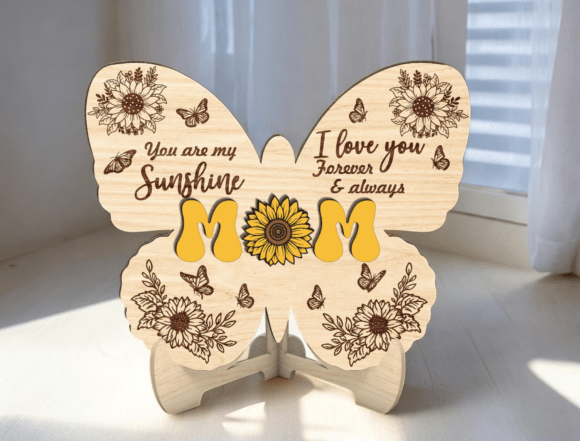
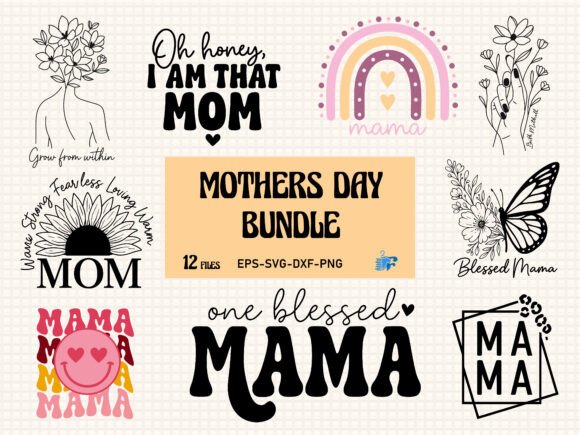
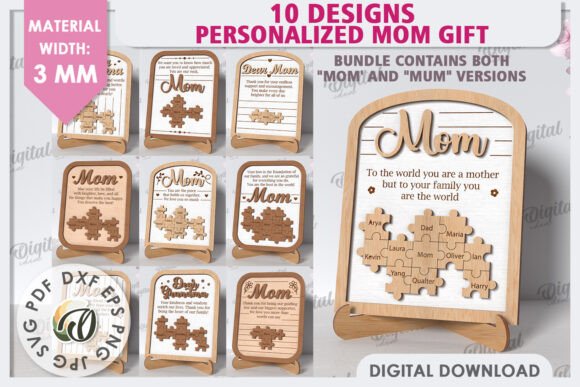
Opening the Personalized Mom Gift LaserCut Bundle, I immediately notice its quiet confidence — no over-the-top flourishes, no forced whimsy. Ten designs, all laser-cut inspired in form but clearly built for embroidery execution. Think delicate floral frames, soft script lettering with subtle cutout accents, minimalist heart motifs, and gentle botanical silhouettes. It’s not flashy; it’s thoughtful. That matters when you’re stitching for real people — moms who’ll hold a baby blanket embroidered with this design, or slip on a sweatshirt stitched with one of these layouts and feel seen, not sold to.
How It Lives in the Real World: From Mockup to Market
Last week, I prepped a custom embroidered tote bag for a local boutique’s Mother’s Day launch — cotton canvas, medium-weight, natural off-white. I pulled three options from the Personalized Mom Gift LaserCut Bundle: a dainty “Mom” script framed by vine-like negative space, a small layered heart with interior cutout detail, and a rounded monogram-style layout built for personalization. All three translated cleanly. The open areas stayed crisp after stitching — no fill-stitch bleed, no fuzzy edges — thanks to intentional spacing and balanced stitch density. Customers responded strongly to the heart design on tea towels and the script on linen pillow covers. It felt handmade without looking labored.
This bundle thrives where warmth and clarity intersect: baby onesies (use the smallest variants), lightweight aprons, structured cap visors, and even delicate kitchen towels. As an Etsy seller, I’ve used two of these as base layers for appliqué designs — the laser-cut aesthetic lends itself beautifully to raw-edge or fused fabric overlays. For sweatshirt embroidery, I gravitated toward the bolder, slightly wider scripts — they hold up against knit texture without needing excessive underlay. And yes, it works for holiday embroidery too: swap thread colors to sage and cream for spring, terracotta and oat for fall, and it reads as timeless, not seasonal.
Where Caution Meets Craft: Know Your Limits
Don’t force it onto every surface. On thin or highly stretchy fabrics — think ribbed baby bodysuits or lightweight jersey tees — some of the finer interior cutouts (especially in the script-based files) risk distortion if stabilizer isn’t precisely matched. I tested one design on a curved baseball cap front and found the tightest corners softened slightly during hooping; it recovered well with tear-away + light cutaway combo, but wouldn’t recommend it for ultra-tight crowns without simplifying first.
Dense fill areas — like the center of the larger floral frame — can look heavy on dark fabric unless thread contrast is intentional. I ran a quick black-and-white mockup before committing to navy twill: the design held shape, but the inner details receded. Lighter thread or a simplified version would serve better there. Also, avoid layering this directly over seams or bulky pockets — the clean lines rely on flat, stable ground. And while it’s labeled a *Laser Cutting* bundle, remember: this is a *machine embroidery design*. Don’t assume it includes vector files unless confirmed — treat it as a digital embroidery file first, decorative asset second.
Design Notes Every Embroiderer Should Check Before Stitching
- Test on scrap fabric first — especially with your exact stabilizer and thread combo. These designs lean into subtlety; what looks sharp on screen may soften in satin stitch.
- Review stitch density — not all ten files are equal. Some use lighter running-stitch outlines; others build volume with layered fill. Match density to your fabric weight.
- Confirm hoop size compatibility — a few extend just beyond 4x4” boundaries. If you’re using smaller hoops regularly, check dimensions before digitizing adjustments.
- Inspect small details — tiny stems, narrow connectors, and interior cutout shapes need clear visibility at 100% zoom. Zoom in before sending to your machine.
- Use proper stabilizer — medium-weight cutaway for knits, tear-away for stable wovens, and always test wash one sample. This is a personalized gift — durability matters.
- Check licensing — since this is marketed for commercial use (Etsy sellers, craft fairs, small shop products), verify whether resale of finished items is permitted, and whether redistribution of the digital embroidery file is restricted.
Why It Builds Trust — Not Just Totes
Customers don’t buy “embroidery.” They buy meaning, care, and recognition. The Personalized Mom Gift LaserCut Bundle delivers that quietly. Its restraint signals intention — not algorithmic trend-chasing. When stitched on a linen tea towel, it reads as curated, not mass-produced. On a baby blanket, it feels tender, not cutesy. That nuance elevates your handmade product from “nice” to “cherished.” For craft business owners, that translates to repeat buyers, tagged Instagram posts, and word-of-mouth referrals — because people want to share something that looks like it was made *for* someone, not *at* them.
It also supports brand consistency. Whether you’re selling embroidered patches, custom apparel, or printable mockups for clients, this bundle offers cohesion without repetition. You can rotate designs across product categories — same visual language, different application — and maintain a recognizable, calm, elevated tone. That’s rare in Mother S Day collections, which often swing too far into glitter or cliché.
Final Thought: A Tool, Not a Trend
The Personalized Mom Gift LaserCut Bundle isn’t a shortcut. It’s a well-considered set of design assets — clean, adaptable, and respectful of both the machine and the hand behind it. It won’t fix poor hooping or mismatched thread, but it will reward careful execution. Use it for custom apparel that feels personal, for boutique merchandise that stands out on a shelf, for holiday embroidery that doesn’t shout, and for small shop products that earn genuine smiles — not just “likes.” Just remember: great embroidery starts before the needle drops. So open that zip folder, pull up a mockup, and ask yourself — does this feel true? Because if it does, your next finished product already has its heartbeat.